Now that you have signed up for the HPDE, you need to get your car ready for a track day. To self-tech your car, download the HPDE Tech form, and check over all the systems highlighted on the form. You will sign this form to take full responsibility for the condition of your car while it’s on track.
Preparing Your Car for the Inspection
The technical requirements for the HPDE are just common sense checks to make sure your vehicle is in good, safe working order. It is important for you to check out your car before trying to get it inspected. You and the shop only want to do it once per event. Here I will go over the different categories of the technical form with some short explanations.
Wheels and Tires
The wheels should be round without any dents or damage to the mounting surface. The tires should be in good condition. The tread should be above the wear bars. No cords or belts should show. Flat tires repaired with plugs should not be used as these could fail under the high stress of track conditions. Hubcaps or beauty rings should be removed. They can come off causing a dangerous situation for you & other students.
Steering and Suspension
Check the wheel bearings by grabbing the tire & trying to move the wheel from side to side. There should not be any play or clunking sounds. The front wheels should move when you turn the steering wheel. There should not be any excess play.
Engine
The engine should not have any leaks that will allow liquids to fall onto the track. These fluids will cause slippery conditions on the track. This includes radiator fluid (antifreeze) which is very slippery. The battery should be secured with two (2) bolts. The battery terminals should be covered to prevent any arcs in case of accidental contact.
Brakes
The brake system should be in good working order with no leaks in the system. The brake lines should not have any cracks. The brake fluid should be clear & at the maximum level. The pads should have plenty of life left in them, as the high speeds on the track will wear them out faster than the street. The brake lights should function properly.
Safety and Equipment
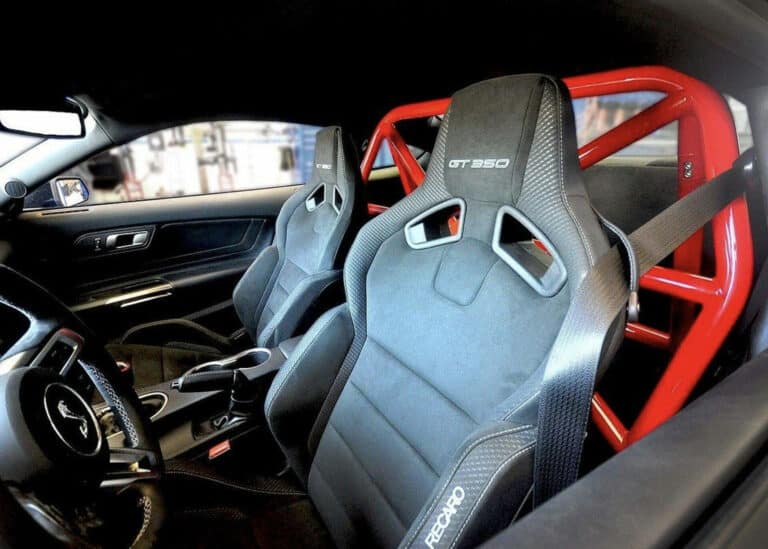
Seatbelts must be in good condition. Factory seatbelts are OK. Cars without fixed roofs are required to have roll bars. Natural fibers are recommended for clothing. Minimum allowable clothing is jeans, a T-shirt & closed toe shoes. You will be required to wear a helmet when on the track. The minimum rating is SNELL 2000 (SA2000 or M2000). Newer helmets with a SA rating are recommended. Eye protection is required (face shield, goggles, safety glasses). The more and better the safety equipment you have & use, the safer you will be.
Miscellaneous
There should be no exposed wires. The car should have a good gas cap that seals. The seats should be bolted in tightly.
At the Track
Now that you made it to the track there are still a few things to do. You will want to take out everything you can. Remove your spare tire & jack. Take out all the floor mats. Any more loose stuff in there? Take it out. Next apply some wax to a portion of your door or quarter panel. When it dries to a haze, leave it there. Take some racer’s tape (colored duct tape) & put your “numbers” on top of the waxed portion. Now wipe off the rest of the haze. When the end of the day comes, you will be able to remove your numbers without doing damage or leaving a residue on your paint. Clean your front & back windows with glass cleaner. There will be less glare & you will be able to see your reference points easier. Fasten any unused seatbelts. You don’t want the buckles flying around. Apply some white shoe polish from the most outward tread block to around the shoulder of your tires. By checking the shoe polish after a run, you can tell if your tires are rolling over onto the sidewall. Most people need to increase the tire pressure from what they normally use on the street. How much will depend on your tires. When you come off the track after a run, use a block of wood to keep our car from rolling. Don’t use the parking brake. That will trap the heat that could cause your rotors to warp. Keep the engine running for a couple of minutes with the hood up. This will allow your engine to cool down & help circulate the hot fluids.
Thing to Bring
Here are a few things to bring that will help make your HPDE more enjoyable. The list can be changed to suit your region & climate/season. For the car: glass cleaner, wax, and a quart of oil, rags, white shoe polish (applicator bottle type), a battery operated air compressor, a tire gauge, a tarp to put all the stuff you took out on, and some basic tools. For you: a change of clothes, suntan lotion, drinks, a cooler, folding chairs, a shade canopy (Thunderhill in July), a camera, and friends to enjoy the driving with.
By Michael Quan